June 23, 2026Timberline Excavation
Tree and Brush Mulching on Waterfront Properties in Maine

Complete guide to Maine DEP shoreland zone regulations, permit requirements, application process, timelines, and compliance requirements for waterfront properties.
Tree and Brush Mulching on Waterfront Properties in Maine
Owning a waterfront home in Maine is a dream come true. Whether your property sits along the rocky Atlantic coast, the banks of the Penobscot River, or the shores of a quiet lake in the North Woods, the view is everything. Over time, nature takes over. Fast-growing brush, invasive saplings, and dense undergrowth can quickly choke out your shoreline, block your views, and compromise the health of your mature trees.
Managing vegetation next to water requires a delicate touch. Waterfront ecosystems are highly sensitive, and Maine has strict environmental laws to protect them. Traditional land-clearing methods—like using heavy bulldozers to rip up roots or creating massive burn piles—can trigger catastrophic soil erosion and ruin your shoreline.
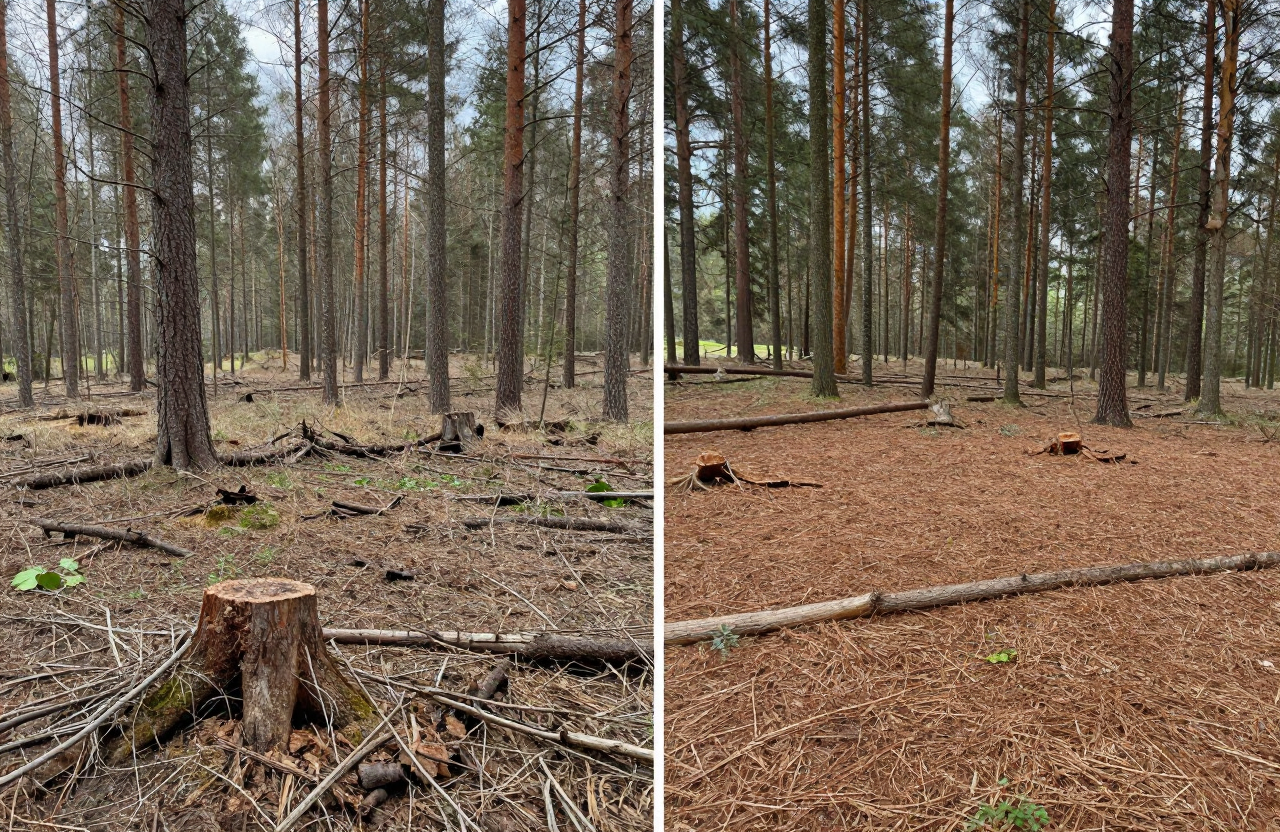
Forestry mulching provides a sustainable, efficient, and regulatory-friendly solution for managing waterfront property. Specialized attachments like tree mulchers and tree shears, mounted on precision excavators, can thin underbrush and clear views while keeping your soil and shore completely intact.
Understanding Maine's Shoreland Zoning Laws
Before turning on any machinery, landowners must understand how the state regulates waterfront clearing. Maine's Mandatory Shoreland Zoning Act (MSZA) protects water quality, prevents erosion, preserves wildlife habitats, and conserves shorelines.
The shoreland zone generally encompasses all land within 250 feet of the normal high-water line of great ponds, rivers, and tidal waters, as well as within 75 feet of specific streams.
SHORELAND ZONE OVERVIEW:
- 75-Foot Buffer Strip: Strictest clearing rules apply. Uses a strict "Point System". No cleared openings allowed.
- Remaining Shoreland Zone (extends up to 250 feet): Clearing limited to 25% of lot area. Max 40% tree volume cut per 10 years.
The 75-Foot Buffer Strip
The first 75 feet moving inland from the water's edge is the most heavily protected area. Within this buffer strip, the law generally prohibits creating new cleared openings in the forest canopy. You cannot clear-cut an area to put in a sprawling lawn.
State rules require a well-distributed stand of trees and other vegetation to remain. To enforce this, Maine uses a point system that grades a 25-foot by 50-foot plot based on the number and size of trees present. Any tree removal must leave behind a minimum point score to remain compliant.
Ground Cover Restrictions
Vegetation less than three feet tall, including natural ground cover, cannot be removed from the shoreland buffer. This ground cover acts as a sponge, filtering storm runoff before it washes nutrients and pollutants into the water.
Fortunately, the state does allow for selective pruning of the bottom third of tree branches to open up a "window" view to the water without killing the tree.
Stump and Root Systems
Maine law highly restricts the removal of tree stumps within the shoreland zone. Ripping stumps out of the ground destabilizes the soil, leaving it vulnerable to washing away during the next heavy rain. The state prefers that stumps are left in place to naturally decay, or ground down flush with the earth.
Local Control Over State Rules
While the state sets baseline restrictions, local municipalities administer and enforce their own shoreland zoning ordinances. Towns often establish rules that are significantly more restrictive than state law.
Always consult your local Code Enforcement Officer (CEO) and secure any necessary permits before moving forward with a project.
Excavator-Mounted Tree Mulchers vs. Tree Shears
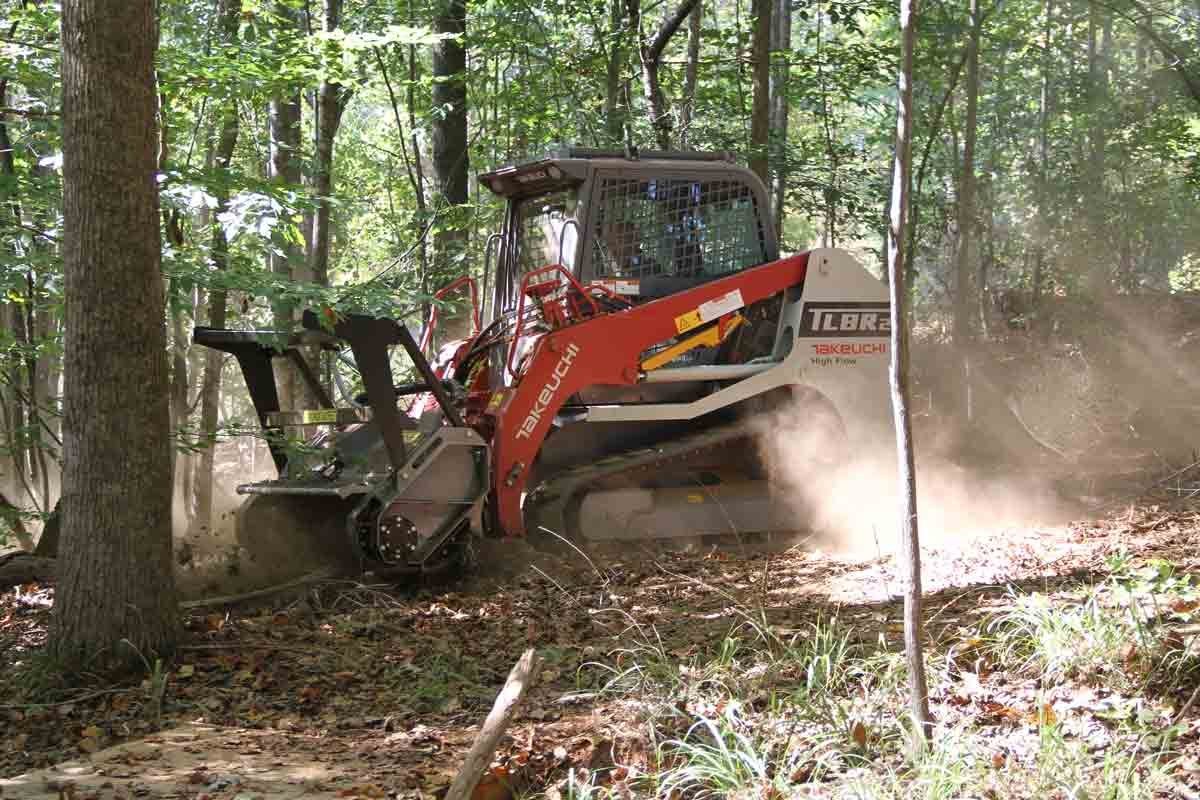
Traditional land clearing often relies on skid steers or heavy bulldozers. On waterfront lots, heavy machines driving back and forth can severely compact the soil and tear up the shoreline bank.
Mounting high-performance attachments to an excavator boom provides a much safer, more precise way to manage vegetation.
EXCAVATOR ATTACHMENT COMPARISON:
- Tree Mulcher Head: Primary use is shrub, brush, and sapling shredding. Uses high-speed spinning drum with teeth. Debris result is immediate, nutrient-rich mulch layer. Soil impact is non-invasive, surface-level only.
- Tree Shear: Primary use is felling larger trees cleanly. Uses hydraulic cutting blade. Debris result is whole log cleanly dropped or stacked. Soil impact is zero impact, absolute drop control.
The Benefits of a Tree Mulcher Head
A forestry mulcher head uses a rapidly spinning drum equipped with hardened carbide or steel teeth to shred standing brush, briars, and small trees into organic mulch instantly.
- Zero Debris Hauling: It eliminates the logistical nightmare of dragging cut brush up a steep waterfront bank. There are no slash piles to burn or haul away.
- Built-In Erosion Control: The shredded wood fibers are deposited directly onto the ground, forming an immediate blanket of mulch. This blanket cushions the soil against heavy rainfall, preserves moisture, and prevents erosion.
- High Selectivity: An excavator operator can precisely lower the mulching head onto a single invasive bush or sapling while completely avoiding the valuable white pine or oak growing right next to it.
The Benefits of a Tree Shear Attachment
When dead, dying, or hazardous trees must be removed according to local zoning codes, a hydraulic tree shear is the ultimate tool.
- Total Controlled Felling: Traditional chainsaw cutting carries the risk of a tree falling toward the water, damaging the shoreline bank or landing in the lake. A tree shear grabs the trunk hydraulically, cuts it cleanly at the base, and allows the excavator to lift and carry the entire tree away safely.
- No Ground Disturbing Scrapes: Because the tree is lifted away rather than dragged across the ground, the sensitive forest floor and underlying ground cover remain completely undisturbed.
- Flush Cutting Capability: A shear can cut a tree down perfectly flush with the ground. This keeps the stump intact below the surface to hold the soil together while meeting shoreland requirements.
Why Winter is the Ideal Season for Waterfront Clearing
Many Maine homeowners assume that land management is strictly a spring or summer project. When it comes to sensitive waterfront properties, the dead of winter is actually the absolute best time to schedule work.
WINTER CONDITIONS BENEFITS:
- Frozen Ground: Saves soil, prevents ruts
- Dormant Plant Life: Reduces stress and disease transfer
- No Leaf Canopy: Better visibility for selective thinning
Unmatched Ground Protection
Maine winters bring freezing temperatures that turn soft, muddy shorelines into rock-solid, frozen ground. Operating machinery on frozen ground drastically reduces the risk of rutting or soil compaction. Heavy equipment can maneuver smoothly without churning the earth into a muddy mess that easily washes into the water during spring thaws.
Minimizing Plant and Tree Stress
During the winter, trees and woody shrubs enter a dormant state. Cutting or pruning trees during dormancy minimizes the physiological shock to the plant. It also prevents the spread of common tree diseases, such as oak wilt, because fungi and insect vectors are completely inactive in sub-zero temperatures.
Maximum Visibility for Precision Cutting
Without thick summer foliage blocking the view, operators have complete visibility of the property's topography and forest structure. This makes it far easier to evaluate the canopy, identify hazardous dead wood, select precisely which saplings to remove, and protect desirable native vegetation.
Protecting Sensitive Ecosystems with Polyethylene Mats
Even with frozen ground, additional precautions are necessary when working near delicate wetlands, marshy lake edges, or steep river banks. This is where heavy-duty polyethylene construction mats become invaluable.
These interlocking ground protection mats act as a temporary roadway for the excavator. By placing these mats along the work path, the weight of the machine is distributed evenly across a broad surface area.
- Elongated Weight Distribution: The ground pressure exerted by the excavator tracks is reduced to a bare minimum, preventing localized soil compression.
- Preserving Understory Micro-Ecosystems: The mats protect low-growing, protected ground cover and delicate native root systems from being sheared or crushed by turning tracks.
- Eliminating Track Slippage: On sloped waterfront terrain, mud or snow can cause machine tracks to spin and tear up the turf. Polyethylene mats provide traction, ensuring the machine moves cleanly without scuffing the earth.
Maximizing Root Safety with the Steelwrist X12 Tiltrotator
The ultimate upgrade for precision land management on a waterfront property is executing the work using an excavator equipped with a Steelwrist X12 tiltrotator.
Consider a standard excavator bucket or attachment as a hand that can only bend at the wrist in two directions. A Steelwrist tiltrotator transforms that attachment into a fully flexible wrist that can tilt up to 45 degrees and rotate a full 360 degrees simultaneously.
Surgical Precision Around Root Flares
The base of a tree where the trunk meets the dirt—known as the root flare—is highly susceptible to damage. Tearing the bark or crushing the large structural roots can invite pests, rot, and eventual death.
With 360-degree rotation, the operator can angle the tree mulcher or shear with surgical precision. They can work around the base of a prize tree, carefully shaving away invasive brush right up to the bark without ever scraping the trunk or nicking a major root flare.
Drastically Reduced Machine Movement
A standard excavator must constantly shift its tracks and reposition its entire body to get the perfect angle on a target bush or tree. Every time an excavator pivots its tracks on the ground, it twists and disturbs the soil.
Because the Steelwrist X12 can manipulate the attachment to face any imaginable angle, the excavator can remain parked in one central position on top of its protective polyethylene mats. The operator can clear a massive radius simply by rotating and tilting the attachment head, keeping machine movement near the water to an absolute minimum.
Conclusion: Balancing Views with Conservation
Enhancing your Maine waterfront property does not require destroying the natural environment that makes it special. By combining a deep respect for Maine's Shoreland Zoning laws with cutting-edge tools, you can successfully balance stunning water views with strict environmental conservation.
Utilizing excavator-mounted tree mulchers and shears provides a surgical alternative to reckless bulldozing. Scheduling your project during the frozen winter months, laying down protective polyethylene mats, and capitalizing on the precise dexterity of a Steelwrist X12 tiltrotator ensures your property is treated with the highest level of care.
The result is a beautifully thinned, healthy, and regulatory-compliant waterfront landscape that will remain stabilized and stunning for decades to come.
Are you ready to safely open up your waterfront views while protecting your shoreline? Proactively reach out to your local Code Enforcement Officer to verify your town's specific regulations. Once you have a handle on your local rules, contact a professional, DEP-certified land management specialist (Timberline Land Clearing and Excavation is a DEP Certified Company) equipped with specialized excavator attachments to schedule a comprehensive on-site assessment.