June 22, 2026Timberline Excavation
Excavation and Site Preparation for a New Home in Maine
Comprehensive cost guide for land grading services in Maine, covering pricing factors, equipment used, project timelines, and what is included in professional grading services.
Building a new custom home in Maine is an exciting milestone, but your dream house is only as good as the earth it sits on. Transforming a raw, heavily wooded lot into a pristine, functional homesite requires precision, heavy machinery, and a deep understanding of Maine's unique terrain and climate.
From the initial tree clearing to the final grading and loam installation for a lush yard, every step of the site preparation process dictates the long-term stability and performance of your home. Whether you are building on the rocky coast or in the forested interior, here is an in-depth look at what it takes to excavate and prep a site correctly.
The Initial Walkthrough and Site Clearing
Every successful site preparation project begins before a single piece of heavy equipment touches the dirt. It starts with surveying the land, flagging property boundaries, and conducting mandatory soil tests. A soil test determines the land's load-bearing capacity, its drainage characteristics, and ultimately dictates the engineering requirements for your foundation.
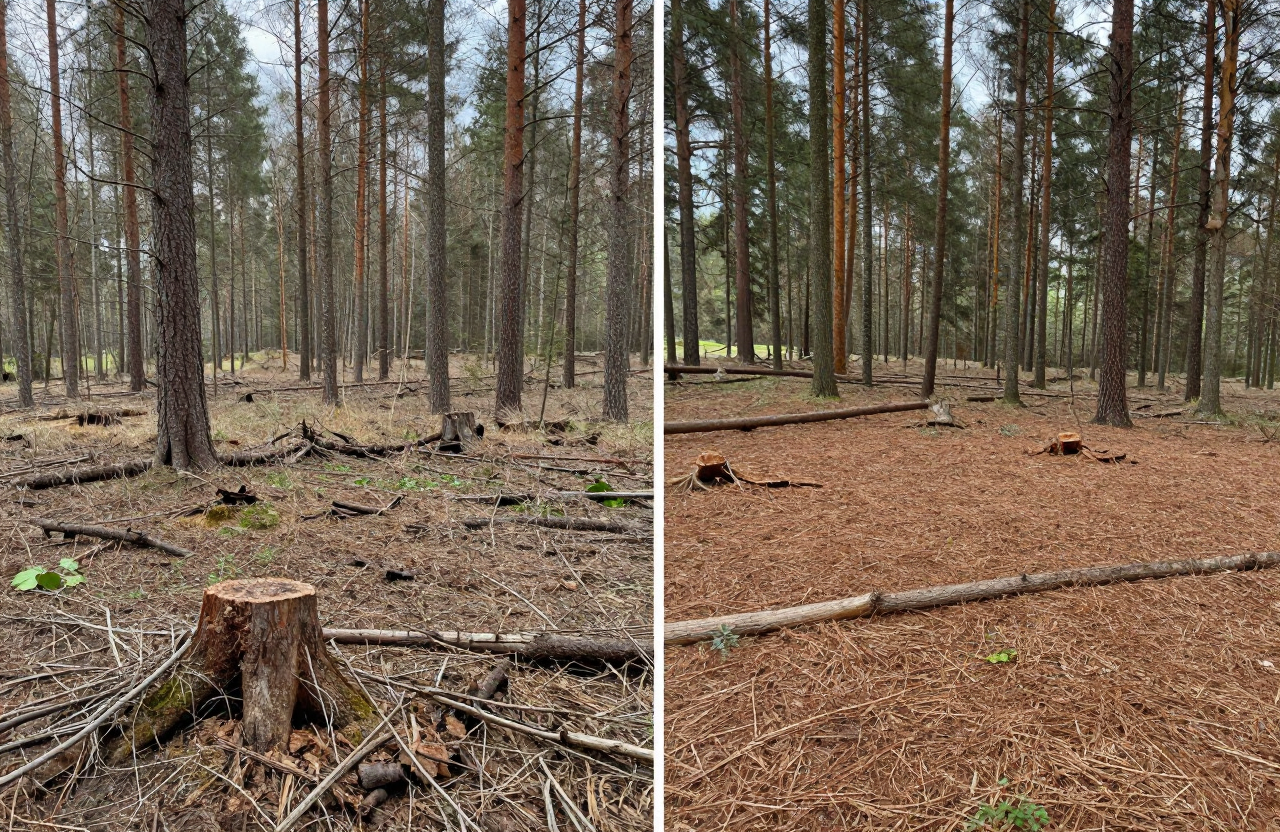
Once the layout and engineering are complete, the clearing process begins. Transforming a wooded lot means carefully removing trees, brush, and root systems. In Maine, clearing requires not just felling trees, but removing large stumps and organic material from the build footprint. If organic matter or topsoil is left buried beneath your foundation or driveway, it will eventually rot and decompose, leading to settling, cracking, and structural failure.
The Power of Advanced Machinery: Tiltrotators, Shears, and Mulchers
Traditional land clearing can be a slow, labor-intensive process. Today, top-tier excavation contractors utilize highly specialized equipment to transform wooded lots with unparalleled efficiency:
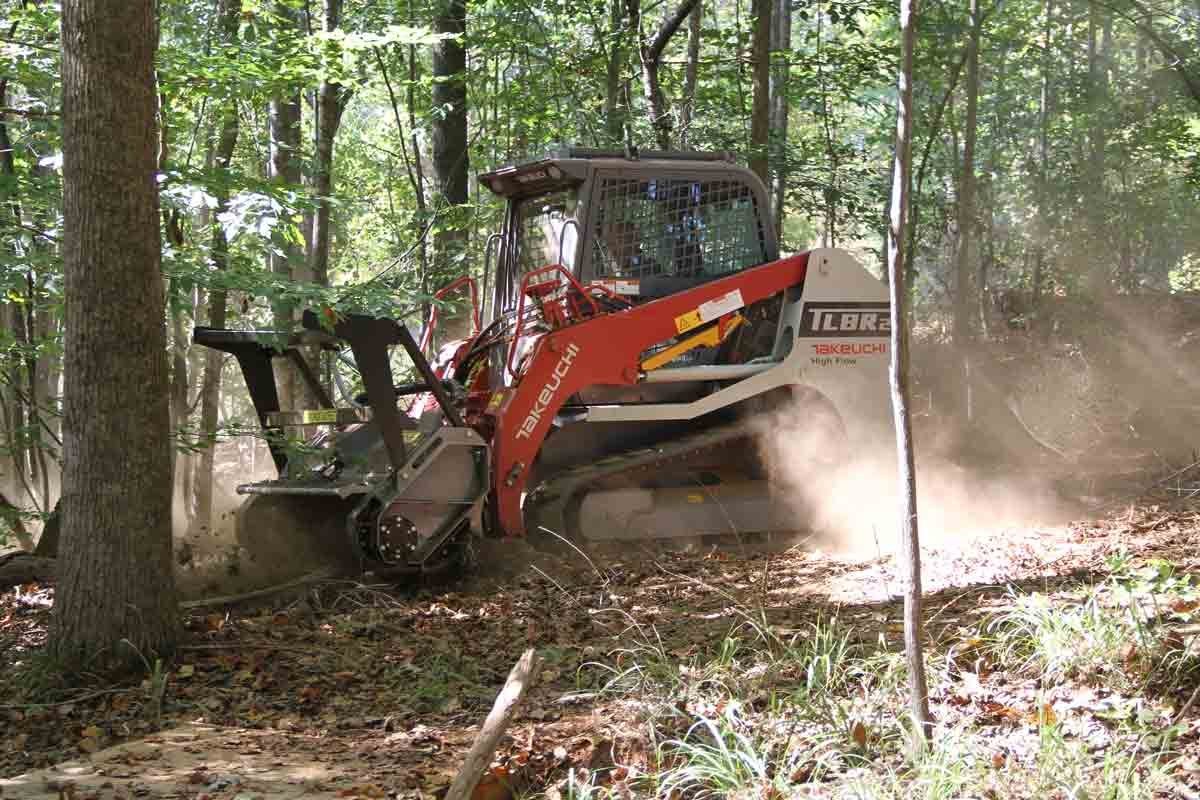
- The Mulcher: Instead of hauling away hundreds of trees, a heavy-duty mulching head attached to an excavator or skid steer can grind standing timber, brush, and stumps down into nutrient-rich mulch in a matter of days. This method clears the line of sight and generates material that can be used for temporary erosion control.
- The Shear: A tree shear attachment allows a machine to cleanly slice through standing trees and thick limbs quickly. It is highly effective for selectively clearing a building pad while preserving specific trees you want to keep for landscaping.
- The Tiltrotator: Often described as the "human wrist" for an excavator, a tiltrotator is a hydraulic attachment that allows the excavator bucket to rotate 360 degrees and tilt at extreme angles. This means the operator can contour, grade, and dig around obstacles without constantly repositioning the machine. It leads to incredible precision when shaping drainage ditches, backfilling footers, and sloping the yard.
Driveway Construction and Ditching
In Maine, where spring mud seasons and heavy winter snowfalls are a reality, proper driveway construction is paramount. A standard driveway cannot simply be laid over topsoil. The process requires excavating the driveway route to the required subgrade depth to remove soft organics.
Contractors must lay a stable foundation using geotextile fabrics to separate the native soil from the aggregate. This is followed by layers of crushed stone, hard-pack, and gravel. Equally important is the ditching. Proper ditching prevents water from pooling on or washing out your driveway. Your contractor should establish sloped ditches that guide runoff safely away from the roadway and into natural or engineered drainage paths.
Soil Stabilization and Erosion Control
Managing water flow and preventing sediment from leaving your property is one of the most critical aspects of site work. Dirt and soil are heavily regulated as pollutants. In Maine, the Department of Environmental Protection (DEP) mandates strict erosion control measures, especially when working in regulated shoreland zones or near wetlands.
Throughout the site preparation process, your contractor should employ Best Management Practices (BMPs) for soil stabilization. This includes:
- Silt Fencing: Installed at the perimeter of the disturbed areas to trap sediment while allowing water to pass through.
- Erosion Control Mulch: Using the mulched materials or straw to cover bare, exposed soils to prevent wind and rain erosion.
- Temporary Seeding and Riprap: Protecting steeply sloped embankments or ditch inlets with riprap (angular rock) or quick-sprouting temporary grass.
Proper soil stabilization prevents your topsoil from washing away, protects local waterways, and keeps your property from experiencing chronic washouts. Furthermore, a certified professional can help you navigate local zoning and environmental requirements to ensure your build is compliant.
Trenching for Utilities: Well and Power
Once the lot is cleared and the driveway footprint is established, it is time to run underground utilities. Your contractor will need to excavate trenches for power lines, telecommunications, and your water well lines.
In Maine, trenching depths are highly regulated to ensure utilities are protected from freezing temperatures during deep winter frosts. Standard frost-line depths vary depending on your municipality, but trenches often need to be dug 4 to 5 feet deep. The trenching process should also incorporate bedding sand to protect delicate pipes and conduit from sharp rocks before the trenches are carefully backfilled and compacted.
Septic System Preparation
The vast majority of new builds in rural and suburban Maine rely on individual on-site septic systems. Septic preparation is a multi-stage process that requires a licensed Site Evaluator to design a system tailored to your property's soil conditions.
The excavation team will dig test pits for the evaluator, and later excavate the area for the septic tank, pump chambers, and the leach field. Precise grading and highly porous sand/fill materials are required to ensure the system functions properly. A poor septic installation can lead to system failure and costly property damage, making experience and adherence to the state plumbing code absolutely essential.
Digging Footers, Foundation Excavation, and Backfilling
With the site cleared, utilities trenched, and the septic mapped, the focal point shifts to the exact footprint of your future home. Excavating for the foundation requires machine-mounted laser levels or surveying equipment to ensure the excavation is perfectly square and level.
Depending on your home's design, your contractor will dig for footers, a full basement, or a crawlspace. The excavation must go down to load-bearing soil, bypassing all loose topsoil and organics. Once the concrete footers and foundation walls are poured and properly cured, the backfilling process begins.
Backfilling requires careful coordination. Heavy machinery can exert immense pressure on new concrete, so contractors backfill in lifts (layers) using granular, free-draining materials like gravel or sand. They compact the soil thoroughly in layers to prevent the foundation from shifting. During this step, perimeter foundation drains (often referred to as French drains) are installed at the footing level to collect and divert subsurface water away from the basement.
Final Grading and Loam Installation
After the house is built and backfilled, the final phase is bringing the site's topography into its finished state. Final grading involves shaping the earth immediately surrounding your foundation so that all surface water (from roof runoff and melting snow) slopes away from the house on all sides. A general rule of thumb is a drop of at least 6 inches within the first 10 feet of the foundation.
Once the rough grading is locked in, the installation of loam (high-quality topsoil) takes place. Your contractor will apply a layer of screened loam across your future yard, driveway borders, and landscape beds. The loam is then raked, leveled, and lightly compacted to create the perfect seedbed for a lush, green lawn.
Best Practices: How to Know It Is Being Done Correctly
Hiring an excavation contractor is one of the most significant investments you will make in your home building process. Here are a few ways to know the work is being done correctly:
- Adherence to Engineering Prints: A good contractor constantly references the architectural and structural prints, using laser levels or GPS machine-control systems to verify elevations down to the fraction of an inch.
- Proper Compaction: They don't just dump dirt; they use heavy vibratory rollers or plate compactors in specific lifts to ensure the soil won't settle a few years down the road.
- Proper Shoring in Deep Trenches: For deep trenches (like foundation work or utility trenching over 5 feet deep), they will utilize trench boxes or slope the trench walls to ensure job site safety and meet OSHA and Maine safety standards.
- Clean Site Management: A professional site will have managed material piles, clean utility trenches without buried debris, and functional silt fencing in place to prevent mud from overtaking the lot.
Conclusion
Turning a wooded Maine lot into a graded, functional homesite is a comprehensive engineering feat. From leveraging advanced machinery like tiltrotators and mulchers to strictly following erosion control standards, careful preparation sets the stage for the structural integrity of your home. By partnering with an experienced, certified excavation professional, you ensure your home's foundation, drainage, and yard will withstand the test of time and the harsh realities of the Maine seasons.